
Sharing the joy of mandolin music
To hear the mandolin is to love it
Music has long been recognized for its therapeutic benefits to mental health and well-being. It can serve as a catalyst for social connection and support.
The mandolin is a versatile instrument that can play any style of music, and mandolin music has a unique quality that is universally enjoyed.
Many of our residents respond only to music, and to see them enjoying the orchestra has been an incredible experience that both families and volunteers have commented on.
About Us
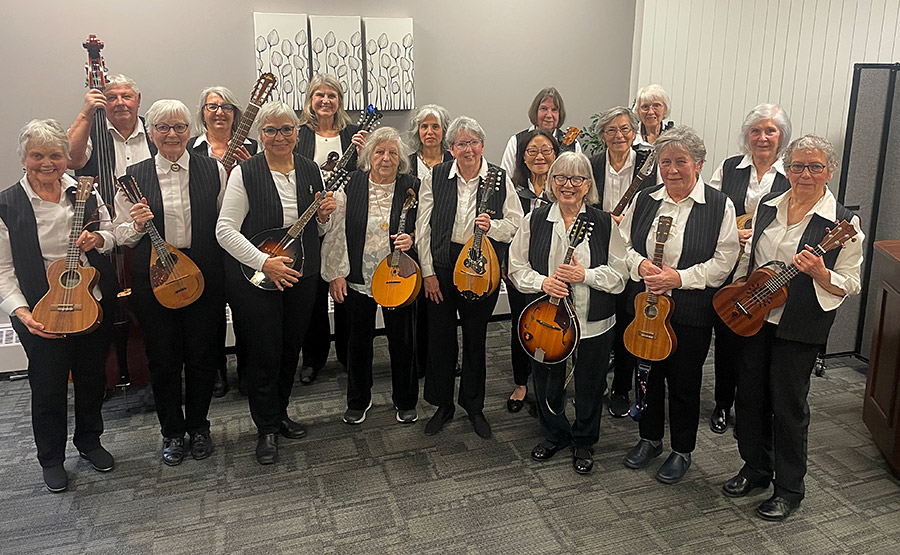
Metro Vancouver Mandolin Orchestra is the stage name of our non-profit registered society, the Lower Mainland Mandolin Society. Registered in 1996, it was created to:
- ensure the continuance of the art of mandolin playing, and
- bring music to the community, particularly those confined to care facilities
The group originally played under the name Melodious Mandolins. In January 2025 we decided on a new name, Metro Vancouver Mandolin Orchestra. The name was chosen to better reflect our identity as an orchestra, which includes more than mandolins, and our geographical location in and around Vancouver. Our orchestra currently comprises mandolins (divided into first and second sections), mandocello, domra (a four-stringed Ukrainian instrument tuned the same as the mandolin), tamburica (a Serbian instrument tuned a little lower than the mandolin), guitar, ukuleles and double bass.
Such a talented group of musicians! The lady who was singing has a beautiful voice and your MC was interesting, informative and hilarious. The reason I joined our [Social] Committee was to put on exactly this kind of event. It was fun, entertaining and gave everyone a chance to socialize
Upcoming Events
About the Mandolin
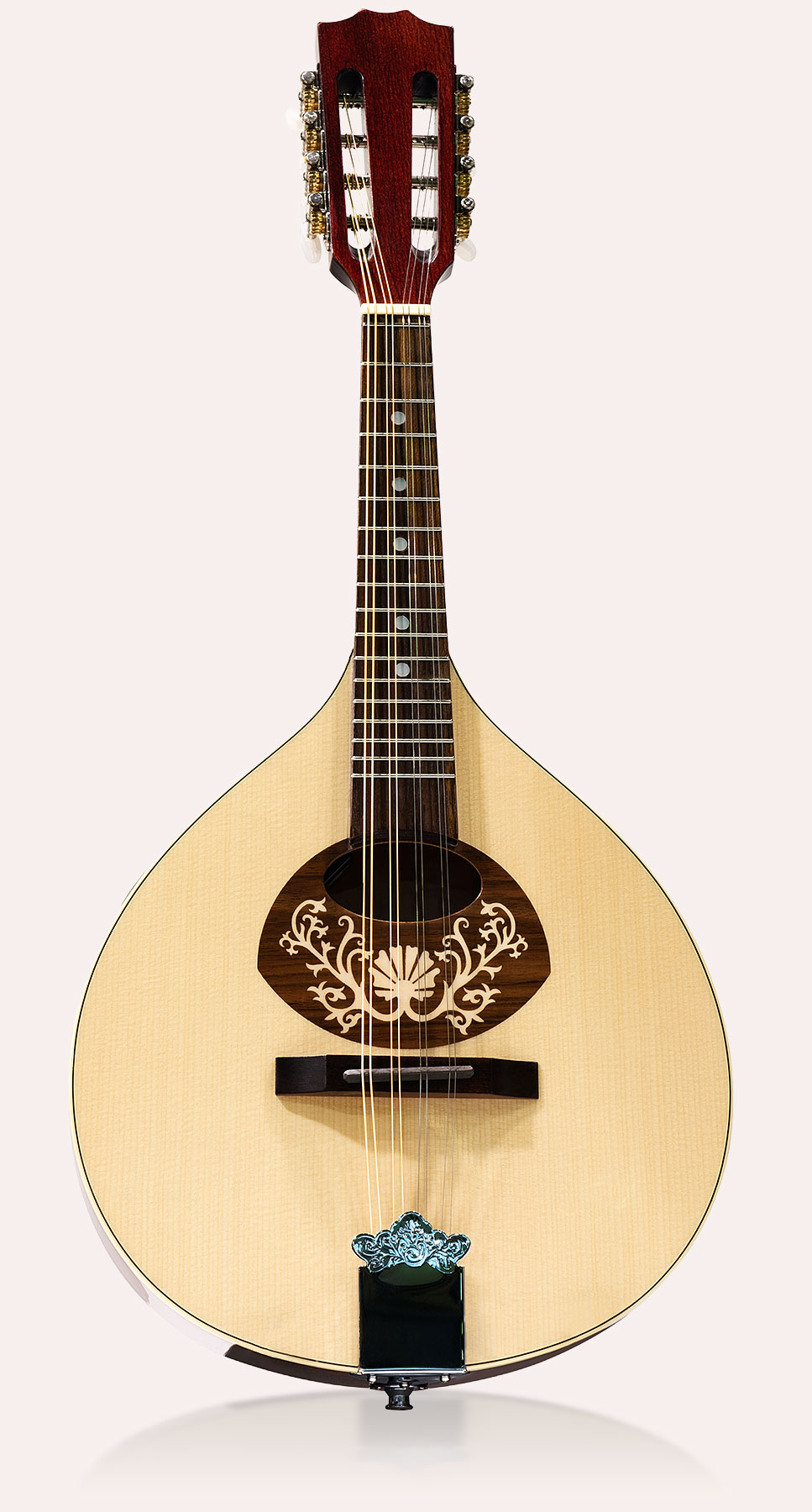
The mandolin is a fretted instrument played with a pick. It has four pairs of metal strings, tuned the same as the violin.
The instrument comes from Italy, where it evolved as a member of the lute family in the mid-1700s. You will see more diversity in appearance than in most other instruments. The original shape was the bowlback, or Neapolitan style, still the most common in Europe, Japan and Down Under. In North America, the Gibson Company redesigned it as a flatback instrument, with a few different styles in use, dominating the mandolin scene over here.
The mandolin family has the counterparts of the violin family: the mandolin, with tuning corresponding to the violin; then the mandola, corresponding to the viola; the mandocello, and the mandobass. The last is quite rare now, and most mandolin orchestras have a double bass in its place. In European mandolin orchestras, their mandola is what we call the octave mandolin, tuned the same as the mandolin but an octave lower, rather than the CGEA tuning of the viola.
[We] had the pleasure of enjoying the music of the Metro Vancouver Mandolin Orchestra this week. The residents were so overwhelmed by the beautiful strumming and synchronicity of the orchestra. There were toes and fingers tapping to the musical energy these performers brought. The room was full! We just loved the performance and can’t wait to have them back!
Mandolin Orchestras
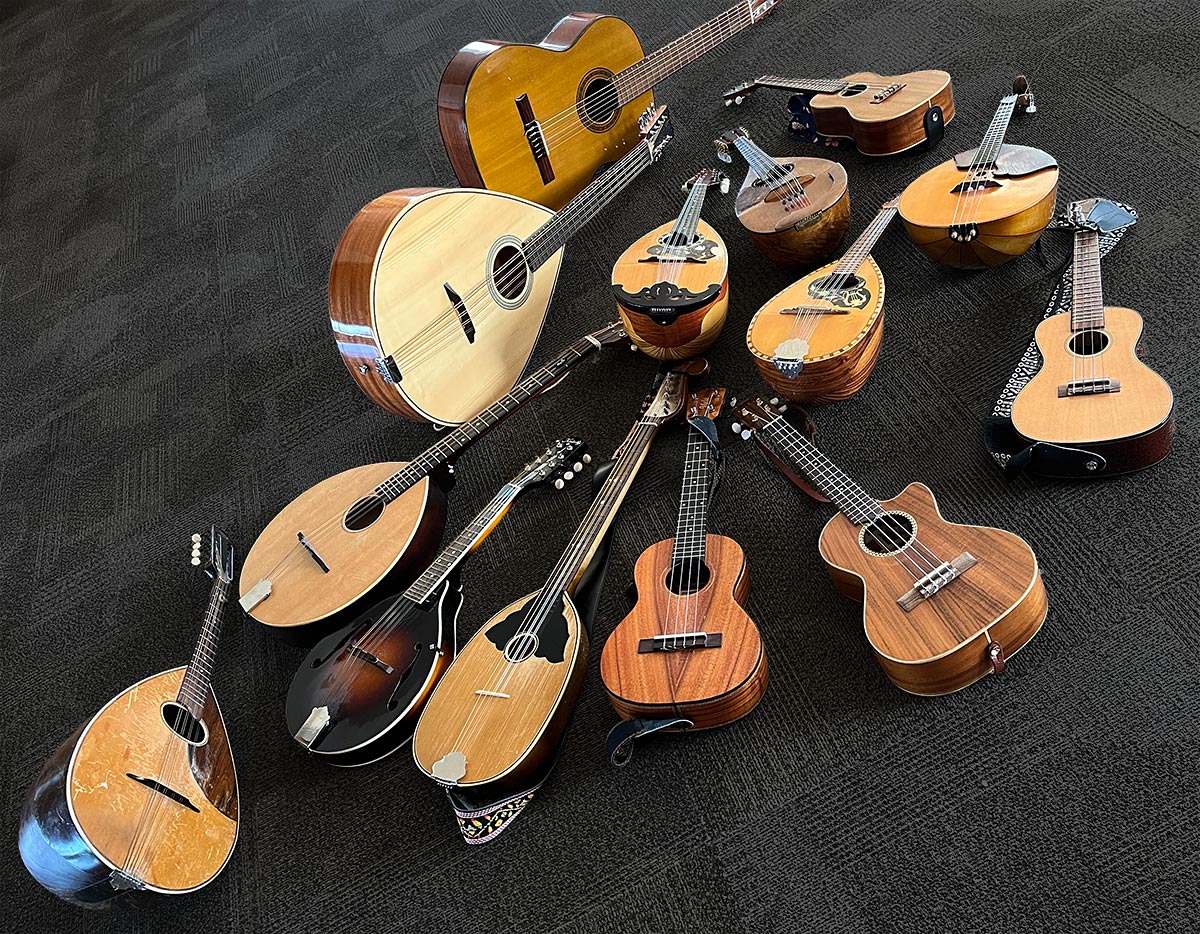
A mandolin orchestra is defined as an orchestra consisting primarily of instruments from the mandolin family, as well as guitars and double bass, instead of or as well as, the lower mandolin-family instruments.
The mandolin has many cousins that are also descended from the lute, including the guitar, the balalaika and domra of Russia and the Ukraine, the bazouki from Greece, the tamburica from Serbia, and even the ukulele, which was originally from Portugal and found a home in Hawaii. All of these plucked instruments sound lovely together, and our orchestra has a number of these cousin instruments as well as mandolins.
In the mid-1800s a touring group known as the Spanish Students took Europe and North America by storm, and mandolin orchestras sprang up all over. By the late 1800s and early 1900s, which we call the Golden Age of the mandolin, every city and town and many schools had a mandolin orchestra, and much music was being written especially for mandolin orchestras. A lot of this music is still in the repertoires of today’s mandolin orchestras, including ours.
Most mandolin orchestras are community based. Today they are found in nearly all major cities in Europe and North America, as well as Japan, Korea, South America, Australia and New Zealand. The Metro Vancouver Mandolin Orchestra is proud to be part of this grand tradition.
Would you like to book us for a concert?
To book us for a concert, use the form or phone 604-741-1702.
Please let us know if you have space limitations. The whole orchestra can be as many as 20 players, but if you can’t accommodate such a large number, we can put together a smaller ensemble (minimum of eight players). We require armless chairs. If you have a microphone we can use, let us know.
Our standard program is an hour long, so do confirm if this fits your needs. We can put together a custom program that includes seasonal music or music from a particular country. Tell us what you have in mind and we’ll do our best to create a wonderful program for you.
As compensation we request an honorarium in the amount determined at the time of booking.
We are available in the Metro Vancouver region: Vancouver, Burnaby, New Westminster and the North Shore.
Privacy Policy
Join Us
If you play a mandolin, mandola, octave mandolin, mandocello, guitar or other plucked instrument, we welcome new members.
You will need to be proficient at reading standard music notation and be at an intermediate or higher level of playing ability.
We practise on Thursday afternoons in New Westminster, if you’d like to check us out. Call Catherine at 604-202-4191 or email cjsands@shaw.ca.
Or if you are interested in learning to play the mandolin, you can get in touch with Catherine as above.
Contact Us
To book us, please use the form above, or contact Barbie at baladouceur@gmail.com or phone 604-741-1702.
If you are interested in joining us or in mandolin lessons, contact Catherine at 604-202-4191 or email cjsands@shaw.ca.